
Solar Inspection
Solar Panel Inspection
“Find every faulty panel on your array in one flight.”
Thermal and visual inspection of rooftop and ground-mount solar arrays. Identify dead cells, hotspots, soiling, micro-cracks, and string-level faults that quietly drain your system output.
Overview
What you get when you engage Drone Inspect for solar inspection.
A 5% drop in solar output is invisible to the eye but adds up to thousands of dollars per year on a commercial array. Manual inspection requires a tech walking the roof with a handheld thermal camera, taking days for a large system and missing panels in unsafe positions.
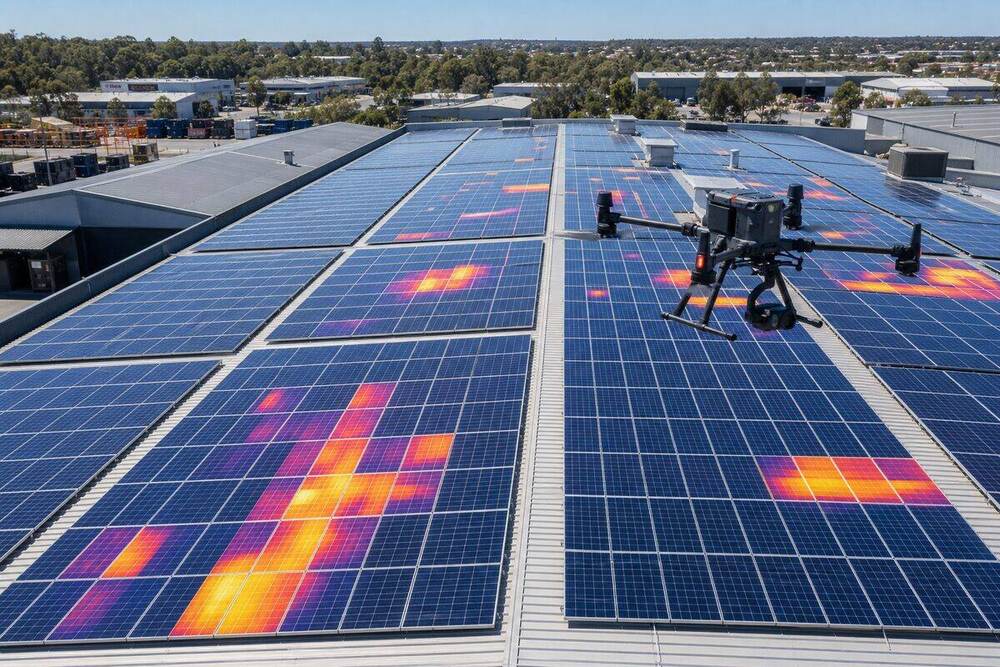
A drone with a radiometric thermal payload covers a 100 kW commercial array in under an hour. Defective cells appear as bright hotspots, dead bypass diodes show as dark stripes, and soiling patterns reveal cleaning priorities. Every fault is geo-located on a panel-by-panel map.
For solar owners, EPC contractors, and asset managers, this means faster troubleshooting, lower OPEX, and documented evidence for warranty claims against panel manufacturers.
Capabilities
What is included in every solar inspection engagement.
Radiometric Thermal Imaging
High-sensitivity thermal cameras measure precise cell temperatures. Hotspots above ambient identify diode failures, cell cracks, and shading damage.
Cell-Level Defect Mapping
Defects pinpointed to individual cells within each panel. Combined IR + RGB imagery shows both temperature and physical damage in one report.
String & Inverter Fault Detection
Identifies string outages, MPPT mismatches, and inverter-side faults from thermal patterns across the array.
Soiling & Cleaning Reports
Quantifies dust accumulation, bird soiling, and growth patterns. Used to schedule cost-effective cleaning before output drops materially.
Warranty Claim Evidence
Documented panel-level defects with serial numbers (where visible) for manufacturer warranty submissions. Cost-recovery often pays for the inspection.
Annual Performance Audits
Year-on-year thermal comparison tracks degradation rate, identifies underperforming sections, and supports refinancing or sale due diligence.
Who We Work With
Industries we serve.
Commercial Solar Owners
Warehouse, factory, and office rooftop systems 30 kW to 5 MW. Annual inspections protect Power Purchase Agreement obligations.
Solar Farm Operators
Utility-scale ground-mount arrays 1 MW to 200 MW. Per-MW pricing for scheduled O&M inspections.
Solar EPC Contractors
Commissioning inspections, defect liability period close-outs, and post-storm damage assessments.
Asset Managers & Lenders
Independent thermal audits for refinancing, sale, or insurance renewal of solar assets.
FAQ
Common questions about solar inspection.
How often should solar panels be thermally inspected?
Industry best practice is annual thermal inspection for commercial arrays over 30 kW. Smaller residential systems benefit from inspection every 3 to 5 years, or after any storm event. Solar farms typically inspect annually as part of scheduled O&M, with an additional inspection after any commissioning, panel replacement, or extreme weather.
What defects can thermal drones actually find?
Cell-level micro-cracks, dead cells, hotspot defects, bypass diode failures, junction box failures, PID (potential induced degradation), shading damage, soiling patterns, string-level disconnections, and inverter input faults. Combined with visual inspection we also identify physical damage like delamination, frame corrosion, mounting bracket failures, and rodent damage to wiring.
Will the inspection void my panel warranty?
No. Thermal drone inspection is a non-contact, non-destructive test. It is the standard method recommended by Tier 1 panel manufacturers including LONGi, JinkoSolar, JA Solar, Canadian Solar, Trina, and Q CELLS for warranty validation. Our reports are formatted to manufacturer warranty submission requirements.
Get a solar inspection quote in 24 hours.
Send us the address and what you need to know. Fixed-price quote in writing within one business day.
Request Quote